Crawford Market Mumbai
Crawford Market is the fruit and vegetable halls, the pet market and the imported-goods bazaar of South Mumbai, all under one Victorian Gothic roof on Lokmanya Tilak Marg. Officially the Mahatma Jyotiba Phule Mandai, it trades Monday to Saturday. On Sunday the retail market is shut as a shopping day — most shops in the main building stay shut, and a few smaller shops and some sections open in the morning, more so before a festival.
When to go
| Monday to Saturday | Most retail shops open around 11am and shut around 8pm. The produce comes in earlier — some sections from about 5am, lorry deliveries around 9am — and some stalls are still shut until about 10.30am. |
| Sunday | Closed as a shopping day — most shops in the main building shut. A few smaller shops and some sections open on Sunday mornings, more so before a festival. |
| Best hours | Mid-morning: the produce displays are full, the crowd has not peaked and the halls are at their coolest. |
There is no air-conditioning inside, only ceiling fans, which is why local shoppers come early and the middle of the day is the least comfortable time to walk the aisles.
Masjid Bunder, on the Central and Harbour lines, is the nearest station at roughly 0.5–0.7 km; CSMT is about 0.9 km, a 10–12 minute walk. Getting to Crawford Market covers the Metro, the buses and the airport run.
Getting there

Four ways in: CSMT for the walk from the Fort side, a Masjid Bunder local for the shortest walk, a BEST bus to the Mahatma Phule Market stop, or a taxi to the gate on Lokmanya Tilak Marg.

Other markets nearby
Bhuleshwar for spices and jewellery, Chor Bazaar for antiques, Mangaldas for cloth, Colaba Causeway for street stalls — each a short ride from the market.
What you are walking into
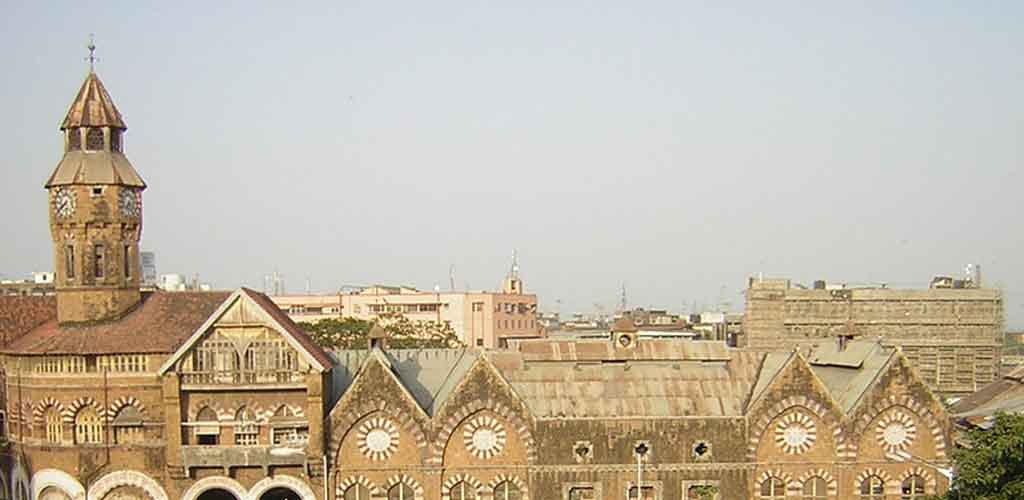
The building opened in 1869, when Arthur Travers Crawford was the city's first municipal commissioner. William Emerson designed it, and John Lockwood Kipling — Rudyard's father — carved the stone fountain in the outer courtyard and the friezes over the entrance arches. The trade inside is the retail market: the licensed wholesale fruit and vegetable yards belong to APMC, out at Vashi and Turbhe, and the APMC explanation sets out which yard sells what, and when. For the building itself, see the market's history.
What to buy, and what it costs
Seven kinds of stall share the building and the lanes around it, and they sit in different places, so know what you came for before you start walking. Prices are quoted per dozen, per kilo or per box and move with the season, the grade and the quantity you take; cards are rarely accepted, so carry cash; UPI works almost everywhere, and a first price is a starting point. Entry to the market is free.
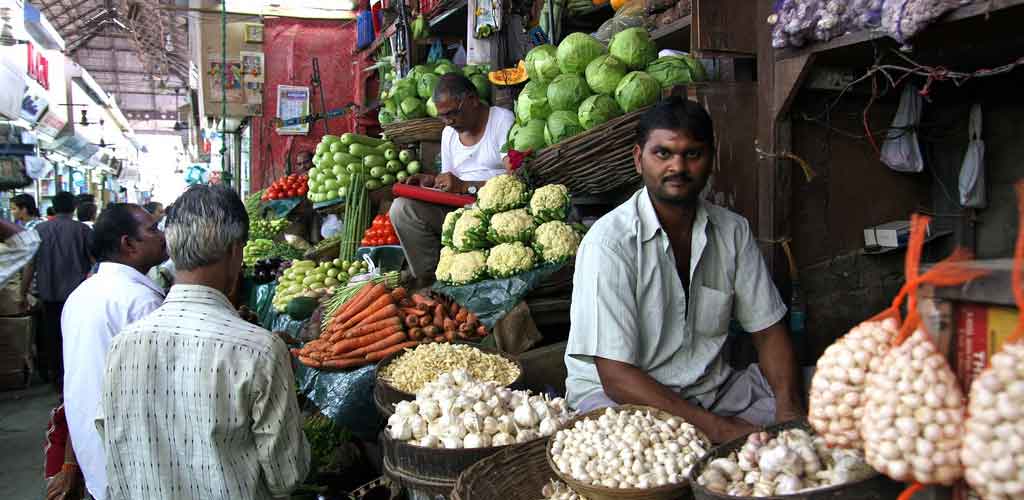
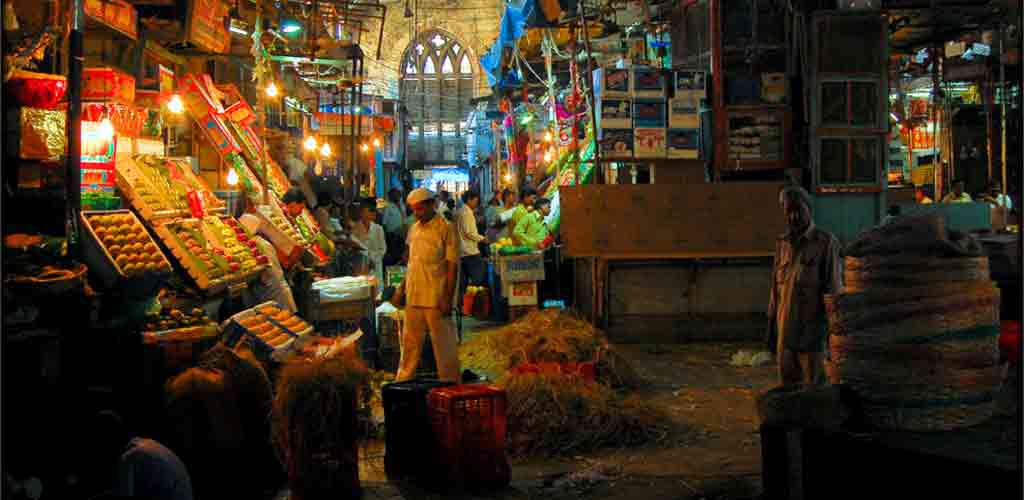
- Fresh fruit and vegetables. The halls at the centre of the building carry the daily produce trade, and in April and May the Alphonso mangoes the market is known for, graded and boxed for the journey home. The produce halls in detail
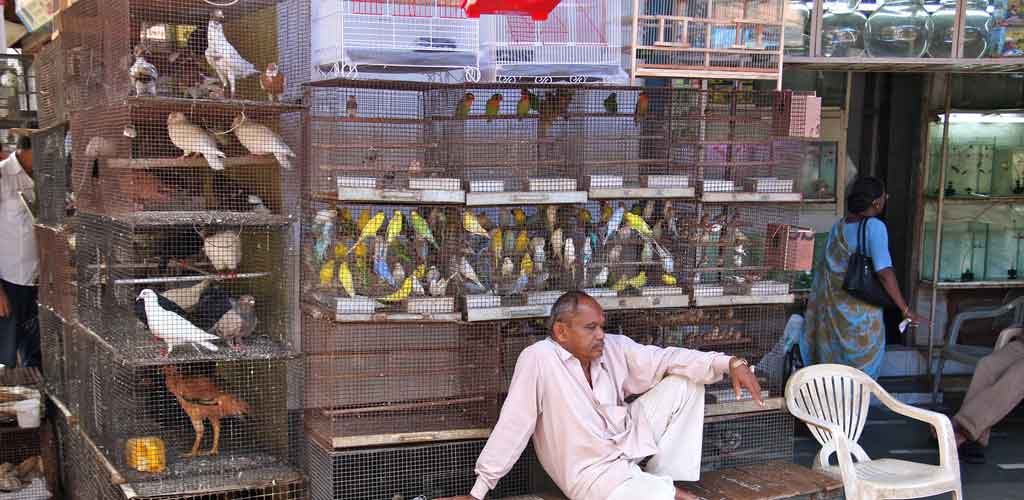
- The pet market. At the far end of the complex: songbirds and small animals, with the feed, cages and tanks that go with them. The same end holds the fish and meat halls, which keep their own trade hours.
- Imported and specialty food. Chocolate, cheese, bakery goods and tinned imports — the trade that made the market's name, still here in the stalls that stock it. The food stalls
- Spices and masalas. Merchants in the spice section grind and blend to order and will mix a masala for the dish you name rather than sell you a packet. The spice stalls
- Art supplies and stationery. Abdul Rehman Street, next door to the market: paper, brushes, frames, ribbon, sequins and school stationery, sold singly or in bulk. The art and stationery shops
- Household goods. Plasticware, storage boxes and kitchen tools on the outside lane; soaps, shampoos and cosmetics from the stalls inside the building. The household lanes
- Clothes and accessories. Ladies' and children's clothing, bags and jewellery in both traditional and modern designs, sold from open stalls and small shops. Clothing and jewellery
How long to allow, and what to avoid
Give the halls an hour: the produce aisles, the pet corner and the spice merchants. If you are buying rather than looking, half a day goes quickly once Abdul Rehman Street and the household lanes are added, and a bulk order or a price comparison across several stalls will fill a morning on its own.
Start mid-morning and work outwards from the produce halls while the displays are still full. The middle of the day is the hottest stretch inside, and the lanes around the building are at their most crowded, so leave the small shops and the stationery street for later or for another visit.
Expect to be offered help, and expect a commission to sit behind it: someone who walks you to a particular stall, shop or agent is usually paid by that stall, and it comes out of what you pay. Ask at the market office if you need a direction. Bring cash, wear shoes you can walk in for a few hours, and carry a bag — the lanes are uneven and busy. For a car, read getting to Crawford Market before you set out: the streets around the market are narrow, and a drop-off at the gate is not the same errand as finding somewhere to leave the car.
Where next
The rest of the market circuit, and the practical pages for this one:
- The complete Mumbai markets guide
- The Victorian architecture heritage guide
- Mumbai traditional markets hub
- India markets cultural guide
- Mumbai street shopping guide
- Mumbai market hours guide
- Best time to visit Mumbai markets
- Where to stay near Crawford Market
- Dhobi Ghat from Crawford Market
- Safety in and around the market