Shopping in Crawford Market
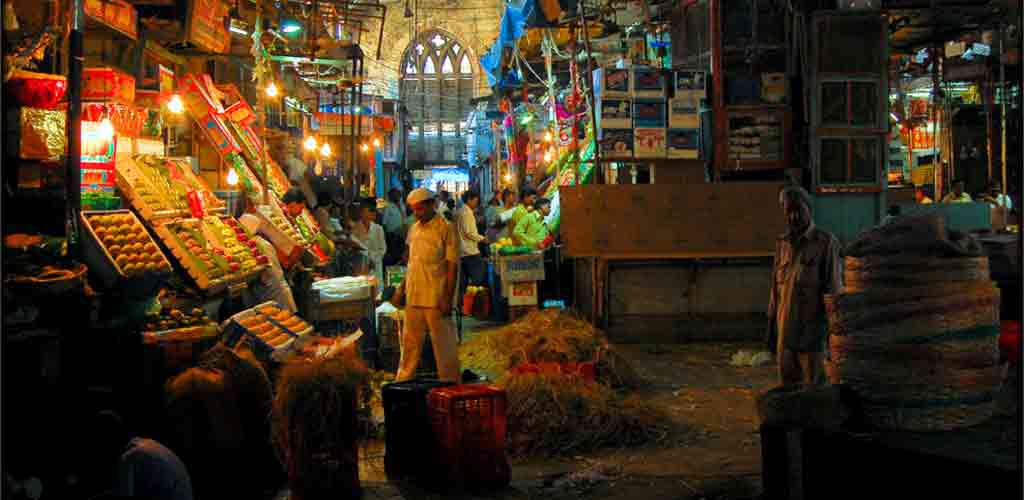
What you can buy at Crawford Market depends on which of its sections you walk into. Four trades fill the building and the lanes around it: produce, cloth, spices and festival decoration. The fish and mutton halls sit in the rebuilt blocks. Each section is priced a different way, so start with what you came for.
| Section | What is sold | Where in the complex | Price basis | Season |
|---|---|---|---|---|
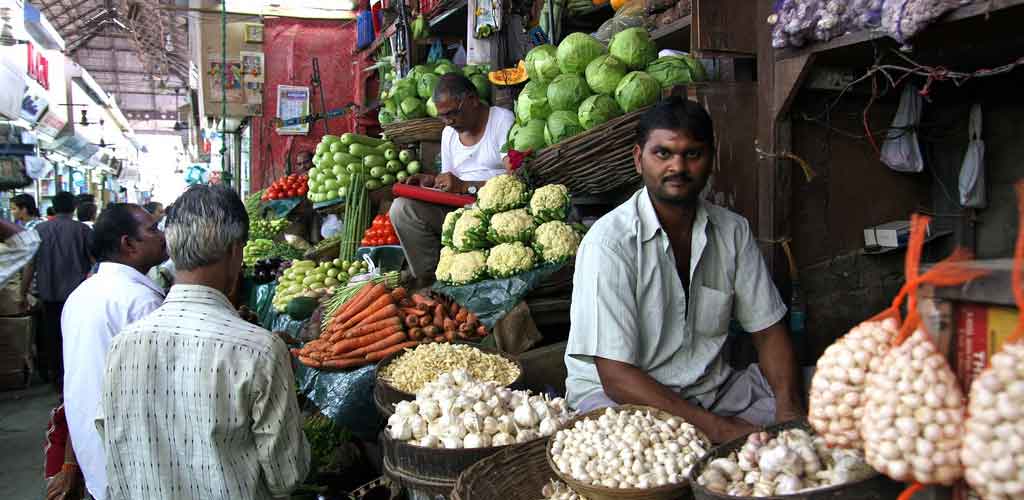
| The produce halls | Fruit and vegetables, the everyday staples and the imported fruit, sold retail through the day and in bulk from the pre-dawn lanes. | Ground floor, at the front of the building. | Per dozen for loose fruit; the crate or the box before dawn. | Alphonso mangoes, April and May. |
| The first-floor textile section | Crawford has not lost its cloth trade, only its auction. The first floor and the surrounding lanes still hold fabric and cut-piece sellers who supply smaller retailers, with ready-made garments and traditional clothing sold alongside at near-wholesale prices. | First floor. | Per metre for cloth. Ask the stall what it will sell you as a minimum. | - |
| The spice stalls | Whole spices and ground masalas. | Ground floor, and in the lanes around the complex. | Per kilo. | Part of the Diwali and Eid buying. |
| The decoration lanes | Artificial flowers and floral decor, lanterns and fairy lights; in December, plastic Christmas trees, baubles, LED light strings, glittery stockings and wholesale candy canes. | Ask at the market office (022-23440749) which lane to walk. | Ask at the stall. | Diwali, in early November, and December. |
| The fish and mutton halls | Fish and mutton, in halls rebuilt under the BMC redevelopment. The fish vendors were moved out in July 2021 and where the trade runs today is unresolved. | Block 3 for fish and Block 4 for mutton, in Phase 2 of the redevelopment. | Ask at the stall. | - |
The licensed wholesale fruit and vegetable trade is a separate errand from the retail hall: APMC's yards at Vashi and Turbhe keep their own published windows. Buying in bulk inside the bazaars is a third thing again, and buying in bulk at Crawford: the trade floor, not the tourist floor sets out what each trade quotes in and which counters will not serve retail at all.
Prices, and how they move
Prices are quoted at the counter rather than printed on a shelf: fruit and vegetables by the dozen, the kilo or the box, cloth by the metre, spices by the kilo. Grade and quantity move the number as much as the season does, so the first price you hear is a starting point. Cards are rarely accepted and UPI works almost everywhere, so carry some cash for the small stalls.
Alphonso mangoes, April and May
Alphonso mangoes are the trade the market is known for, and they land in April and May. In April 2026 Mumbai's retail markets were quoting ₹800-2,000 a dozen, with premium fruit at ₹1,800-2,000 a dozen (Hindustan Times, 14 April 2026; Free Press Journal, 25 April 2026), while the licensed wholesale yard at Vashi, which is not a Crawford stall, sold a box of five to eight dozen at ₹2,000-5,000 before that month's arrivals peaked and ₹1,500-3,000 afterwards (Free Press Journal, 25 April 2026). Those retail figures are the city's markets and the box figures are the Vashi yard's, so ask your stall what it is charging before you commit to a crate.
What the festivals change
The buying changes shape before the big festivals. Ahead of Diwali the trade moves into decoration and gifting: lanterns and fairy lights, artificial flowers and floral decor, dry fruit, spices, crockery and festive sweets, building through the days before Laxmi Pujan in early November (LBB; mid-day, 5 November 2026). Before Eid it is bangles and jewellery, crockery, dry fruit and vermicelli, bought in the week before the festival. In December the decoration lanes turn over to Christmas: plastic trees, baubles, LED light strings and candy canes, which is also how Christmas at Crawford Market runs.
The fish and mutton halls: what changed
348 licensed fish vendors were moved out of the building in July 2021, and the halls are being rebuilt under the BMC market redevelopment. BMC named Block 3 in 2024 and a basement level in 2025 as where the trade would go; the Mumbai Fish Dealers' Association opposes the basement plan. If fish is the reason for your trip, ring the market office on 022-23440749 before you set out. The fish market page sets out the dates and who said what.
The pet stalls: what the courts have said
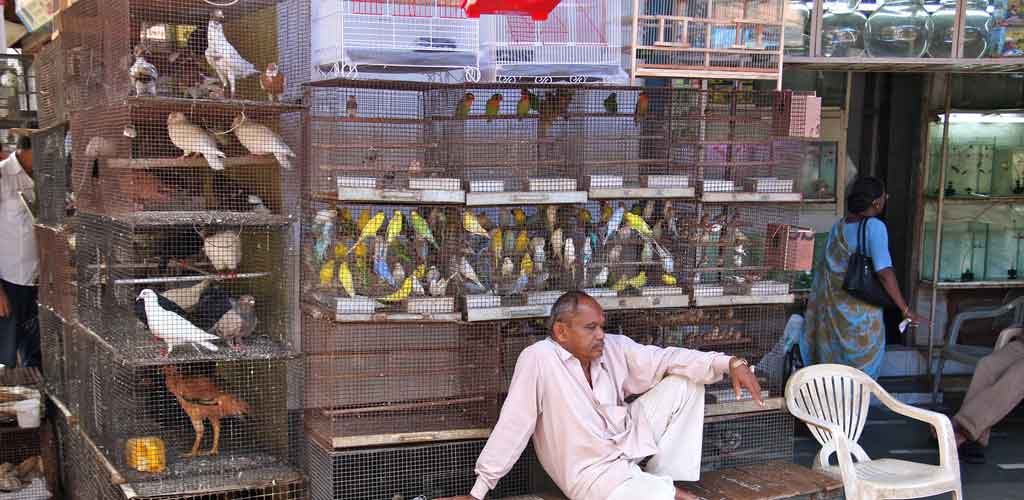
The pet stalls at the far end of the complex are the subject of a long-running enforcement dispute. In April 2017 the Bombay High Court directed the state government and the BMC to ensure the closure of illegal pet shops selling birds and animals here, and to keep a strict watch so that the trade did not restart; animal-welfare groups were still seeking enforcement of that order in July 2024. We do not recommend buying animals at the market.
Before you go
Most retail shops open around 11am and shut around 8pm, Monday to Saturday, and the produce comes in much earlier: some sections from about 5am, lorry deliveries around 9am, and a few stalls still shut until about 10.30am. The opening-hours page carries today's position and the holiday list. Wear shoes you can walk in and carry a bag; the lanes around the building are uneven and busy.
Where to eat around Crawford Market
For a meal after the halls, where to eat near Crawford Market lists three places across the range, with the address, hours and phone number each one publishes.
If the market does not have it
Crawford is one stop on a circuit of Mumbai markets that each carry a different trade. Compare Mumbai's markets: what is sold where sets out which one to walk for cloth, antiques, spices or street stalls.


